How 8mm Film Digitalization can Save You Time, Stress, and Money.
Footage is fixed for color and density. Scans at a higher resolution and after that downconverts it to the resolution required for the disc/drive. Produces higher detail in underexposed movie. Lets you share digitized videos on mobile phones, tablets and computer systems. Includes color correction and dust and scratch decreases in HD movie film scans.
If Scan Coffee shop loses your order, it will pay you up $1,000. Caters to customers who wish to view their old movies on a DVD. The 1080p (mid-priced) alternative is typically enough, but use the higher priced option for the highest quality clearness and color recreation. Offers digital restoration to eliminate most movie flaws. Utilizes standard meaning just.
View video in an online account. i Pad app is readily available. When you get your digitized films, the first thing you ought to do is to make backups and, preferably, keep them offsite. Some film transfer services offer simple movie editing online, so you can reorganize clips and develop customized DVDs.
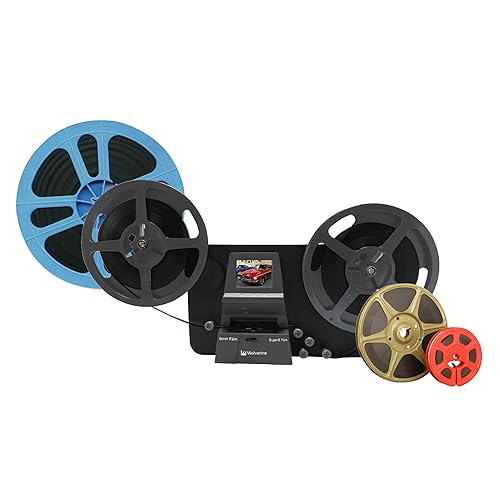
The Ultimate Guide To Diy 8mm Film Transfers
Popular totally free programs include Windows Film Maker and i Movie, part of the i Life suite of software application applications consisted of with brand-new customer Macs. Utilizing Sony Movie Studio Platinum 12.0 for Windows ($94.99), I have actually developed collections of clips to share on DVD and Blu-ray, and I have actually drawn out clips to post on Facebook.
I also bought a Canon PIXMA Wireless Inkjet Image All-in-One Printer with scanner and photo copier, which can print on blank discs. (The MG 5420 design is $94 on Amazon.com.) Printing titles and photos on the discs looks nicer than simply composing on them with a Sharpie. To brochure my films with descriptions, http://shanegpqx474.raidersfanteamshop.com/8-effective-8mm-film-aspect-ratio-elevator-pitches I developed a table in Microsoft Word with columns for reel number, beginning time in film, date, place and topic.
Digitizing my family's old house films has been a substantial project, however it was worth the effort. Now I can enjoy them, share them with relatives and protect them for the future. Idea: Not sure what movie type you have? 8mm has single gears on one side. Super 8 film has smaller sized gears on one side.
The 2-Minute Rule for Diy 8mm Film Transfers
If it has gears on both the leading and bottom, it's silent film. Pointer: Moving movies on your own? Use sites such as Dig My Pics.com to compute the feet of movie on different-size reels and how many DVDs or Blu-ray discs https://en.wikipedia.org/wiki/?search=slides to digital you'll require. From the October/November 2013 Ancestral Tree Publication.

At Just 8mm. com we make our 8mm and Incredibly 8 movie to DVD and thumb drive prices simple to understand, without any complex add-ons, set up charges or needless confusion. Our pricing for 8mm film transfers is based upon the quantity of movie you in fact have, unlike a few of those "fill a box" companies, and all of our costs include the DVD and custom-made label and individual thumbnails and chapter titles for each reel.
Have sound movie? We can move that too for the very same costs as quiet film. Our service likewise consists of keeping an archived master of your 8mm film video for a minimum of 6 months (you get your original reels back, obviously), so we can constantly make additional transfer 8mm film to digital copies of your 8mm movie transfer at a later date.
A Biased View of Transfer 8mm Film To Digital
Much of us have these old 8mm family videos lying around and much of us have lamented at the viewpoint expense to get them converted to digital. [Paul] developed a quite slick method of here. [via Make] Posted in
If you've ever seen a cars and truck race on a figure-8 track, it's a lot of chaos. Vehicles crossing courses at high speed indicates there might be a mishap at any minute. Delicious to watch, but perhaps frightening to be behind the wheel. The same can go for stumbling throughout those old 8 millimeter (8mm) films in your attic.

Count to 8. Now, if you have actually got eight minutes to spare, I believe we can sort it out and reassure you that you can determine and safely bring all that classic video into the digital age to show generations to come. As nobody as soon as said, Do not h 8, self-educ 8! For beginners:-- "8mm" is a vicious blockbuster with old home movies as its subject in which Nicholas Cage plays the hero.
Fascination About Digitalization Of 8mm Film
Now that we're warmed up, https://en.search.wordpress.com/?src=organic&q=slides to digital let's set the stage for talking about those 8mm movies you have gathering dust. Motion pictures in the very first half of the 20th century were shot on big rolls of movie that were 35 millimeters wide (35mm). Amateur and semi-professional filmmakers were using film that was less than half as wide called 16mm.
16mm just wasn't viable for prevalent home usage and 8mm Film Digitalization not all 16mm might catch sound when shooting. To produce an affordable alternative for the masses, the Eastman Kodak company took the 16mm movie and first cut the frame size in half, and then, when processed, literally spliced the long roll of film in half down the middle to develop two film strips.
Twice as much video footage at half the size made shooting motion pictures more available for everyone. The Standard 8 film format (likewise called Routine 8 and Double 8) was launched to the market in 1932. Standard 8 (also called Regular 8 and Double 8)The movie spindles consisted of a 16 mm broad film with two times as many perforations along each edge as typical 16 mm movie.
See This Report on Diy 8mm Film Transfers
When the first pass was complete, the operator opened the electronic camera and switched spools. The exact same movie went through the electronic camera once again, this time exposing the other edge. Develop, splice, and you were left with two spools of 8mm film with Transferring 8mm Film To Digital a single row of perforations along one edge. Each frame was half the width and half the height of a 16 mm frame, so you had the ability to shoot 4 times as much on the very same quantity of movie, which is what made it budget friendly for budgets not dealt with by MGM.
The spools allowed for about 3 minutes of filming, so no time at all for small talk, Capra junior. Super 8 (Super-8, Super 8mm)In 1965, the Super 8 movie format was released to the public and was a lot more simple to use. Smaller sized and more commonly spaced perforations (used in the camera and projector to pull the film along) indicated that the image location was larger, equating to much better image quality.
The cartridge-loading system did not require reloading or re-threading halfway through. The Super 8 introduced a new cartridge system which removed the need to thread the film manually on the spindle at all. The camera might be filled in less than 2 seconds. Splicing was no longer part of the processing process, as the film came in its final width of 8 mm.
8 Simple Techniques For Transfer 8mm Film To Digital
The new spindles of film would not install on a Standard 8 projector, so individuals largely adjusted to the improved Super 8 format. In reality, it worked so well, individuals are still shooting on Super 8, only now they have much better film stock to deal with and they generally transfer to video or digital for smoother editing and proving.