Excitement About Protecting Website From Malware
There are 3 primary methods hackers can use stated vulnerabilities: Backdoors and web-shells upload Implantation of the virus into the base-- какую базу? Addition or elimination of administrators, theft of access to the administrator's panel As a result, we will have infections on the website. And those infections might be the reason that the website is blacklisted by Google.
But almost every complimentary copy of a theme or a template will consist of a web-shell, backdoor, destructive script or any other "present" that a hacker left there. If you are not experienced enough to clean the complimentary template or plugin, the wise thing is to prevent them. Trust us, site clean-up and repair work will cost far more than a brand-new style.
How Website Malware Protection can Save You Time, Stress, and Money.
This kind of hacking is called brute-force attack. In this case, a hacker tries various password mixes to guess the correct password. This approach is a substantial hazard to weak and unreliable passwords. When the system asks a user to create a password, the majority of users tends to produce unimportant mixes.
We all have accounts in social networks., and you might not bear in mind that you've posted a photo with your canine and it's name in the description. That's why brute-forcing may be the easiest method to hack the site. As Trustwave's research has actually revealed, more that a quarter of occurrences related to security of the website took place because of weak passwords.
The Only Guide to Protecting Website From Malware
mediocre. The most popular password was "Password 1". Clearly, users were much more worried about their comfort instead of the security of their site. Working with gain access to over an unsecure channel is a bad idea. While linked by means of FTP, your login and password are shown that method thieves can take this information quickly.
Among the reasons that viruses appeared on the site is server or hosting hack. Here are 2 main points that can lead to such an issue: "Handmade" hostings. There are lots of hostings in the Internet that provide their services. And among them you can fulfill so called "handmade" hostings.
The Ultimate Guide To Website Malware Protection
Frequently, those owners do not have experience and have no idea how to supervise their hosting securely. They do not appreciate software updates, producing backups of the hosted sites. They do not truly appreciate websites that utilize their cervices. That's why such hostings become simple victim for hackers. Thieves can hack the websites quickly.
The only choice is switching to a different hosting company. Sites are hosted unsafely. You should understand that if you put several websites on one hosting account, contaminated site will infect the rest of the websotes. In this case you will require to scan and fix all of the websites rather of dealing only the hacked one.
Website Malware Protection Things To Know Before You Get This
Sometimes professionals might leave some code in your website while working on it to have access to it in future. Then they can use your site to make additional money with the aid of such services as Trustlink, Mainlink, Sape etc. Every skilled expert understands that there is no foolproof choice that will secure your website forever.
Cobweb team will clear, repair and protect your site from hacker attacks, and with the CWIS anti-viruses you can be sure that you will not become a victim.

Indicators on Website Malware Protection You Need To Know
If your website has actually been infected with malicious material, you need to clean your site files as quickly as possible to avoid further damage to your hosting account. First of all, it is suggested to totally disable your site and enable access only from your own IP addresses while tidying up. This way you will quarantine your site, so that hackers will not have the ability to reach it.
In addition, search engines (Google, MSN, etc.) may likewise wind up blocking your website. The most convenient way to quarantine your website is to modify your.htaccess file and enable gain access to only from your own IP address. Use the following two lines (they deal with Apache based servers): deny from allallow from IP_ADDRESS Replace IP_ADDRESS with your own IP address.
The Main Principles Of Protecting Website From Malware
Taking your website offline during the recovery will not affect your future online search engine rankings. To begin the clean-up, download all of your website files to your regional computer system via Antivirus software application. When the scan is finished you need to receive a list of the suspicious files that you require to review.
Below is an example excerpt of malicious code:|=| You can execute comparable functionality on your Word Press site also. You will need to set up and trigger the Non-active Logout plugin. Upon activation, see Settings" Non-active Logout page to set up plugin http://andyhtws208.huicopper.com/strategies-of-website-malware-protection settings. Simply set the time period and add a logout message. Do not forget to click the save modifications button to save your settings.
Website Malware Protection Things To Know Before You Buy
You can add security concerns by installing the WP Security Questions plugin. Upon activation, you require to check out Settings" Security Concerns page to configure the plugin settings. For more in-depth instructions, see our tutorial on how to add security concerns to Word Press login screen. [https://get.menterprise.io">Back to Top ↑] If you have a Word Press security plugin installed, then those plugins will consistently look for malware and indications of security breaches.
Running these online scans is quite direct, you simply enter your website URLs and their crawlers go through your website to try to find known malware and destructive code. Now bear in mind that a lot of Word Press security scanners can just scan your site. They can not get rid of the malware or clean up a hacked Word Press website.
Web Security Can Be Fun For Anyone
[https://get.menterprise.io">Back to Top ↑] Lots of Word Press users don't recognize the significance of backups and website security up until their website is hacked. Tidying up a Word Press site can be really tough and time consuming. Our very first recommendations would be to let a professional look after it. Hackers install backdoors on impacted websites, and if these backdoors are not repaired properly, then your website will likely get hacked once again.
It will likewise safeguard you against any future attacks. For the adventurous and Do It Yourself users, we have actually assembled an action by action guide on fixing a hacked Word Press site. [https://get.menterprise.io">Back to Leading ↑] That's all, we hope this post helped you learn the leading Word Press security finest practices as well as discover the very best Word Press security plugins for your website.
The Single Strategy To Use For Malware
Word Press is a robust blogging and CMS platform powering over 70 million websites-- from single blog sites to large corporate websites. Nevertheless, with growing appeal comes growing problems. Web-based destructive attacks have actually gone up by 81% in 2010-2011 and given that Word Press is a popular platform it gets its reasonable share of attacks.
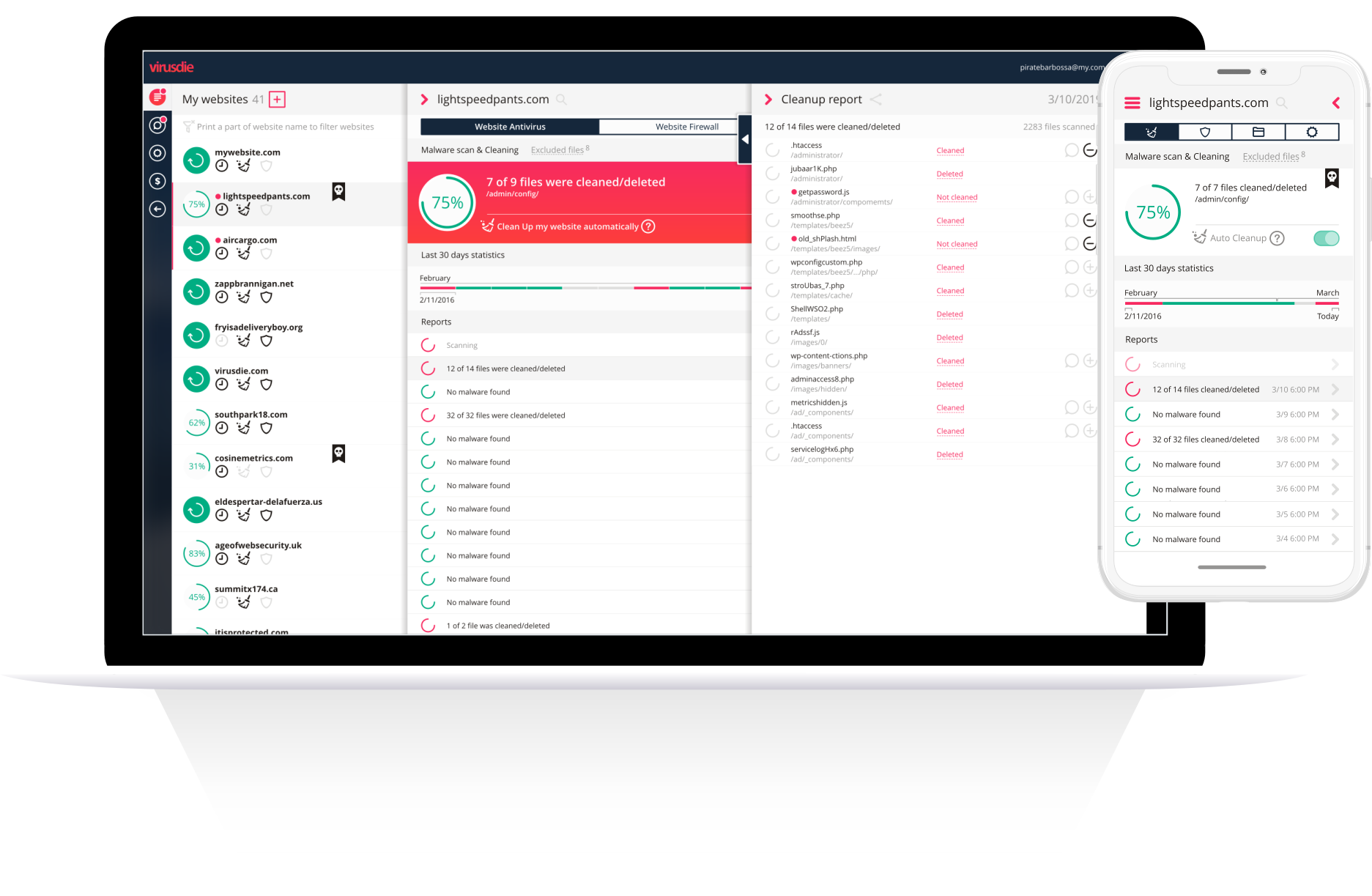
As a user of Word Press, how do you safeguard your website against these exploits?Here are few steps to get to begun: I suggest utilizing a premium backup option who will take safe and secure and regular backups of your website, and also gives you the alternative to change hosts (migrate) efficiently and in a matter of minutes if your website gets jeopardized.
Not known Facts About Website Malware Protection
A website is more than simply the face of your service. It's the throbbing heart of your organization. It's the place where individuals gain access to your services-- often providing sensitive info, consisting of Credit Cards. A lot of organisations can ill manage http://edition.cnn.com/search/?text=protect your webiste from malware a major breach of their information. Clearly, getting your website hacked can posture a considerable risk to your organisation.
However the monetary difficulties do not end there. The loss of future organisation is a real capacity. Individuals talk, particularly if they get hacked. Even the rumor of being hacked can destroy an organisation. Even for companies that don't utilize their site as a portal gateway, when you get hacked your own personal details is likely taken, as is anything you store on the contaminated computer, anything on your servers, and anything on other computer systems that accessed your website.
About Website Malware Protection
Or, for that matter, the contaminated computer system ever understood. Finally, any website that gets hacked requirements to be scrubbed and evaluated for other breaches or possible weaknesses. If a site owner is an accomplished tech wiz, then they can tidy up their site themselves. https://www.washingtonpost.com/newssearch/?query=protect your webiste from malware However for everyone else, it implies you require to employ IT gals and guys to scrub whatever.
That's barely new information though and probably the majority of site owners understand the risk. Today, we desire to go over some practical actions stated owners can take to make sure that their site is safe and secure, both from Malware and outright Infections. And no, we won't have an area on making a more secure password.
4 Simple Techniques For Malware
Bear in mind that the most typical concern is just not understanding what you're doing online. A site might be locked down like Fort Knox, however if a website owner clicks on a suspicious link or popup, or opens attachments in an e-mail, their computer system is infected. The next time they access their website, it's jeopardized.
Even worse, you do not even need to open an accessory. Hackers concentrate on tricking the uninformed, as we saw with the hack of the DNC and John Podesta's account. So for God's sake, don't click things that randomly pop up, don't open email attachments from unverified sources, don't follow shady looking links, and never, ever, trust an e-mail that asks you to follow a link to alter your password if you haven't asked for it.
Some Known Incorrect Statements About Malware
This is not a bad concept, but go to the site yourself, don't follow a link sent out to you. The biggest takeaway is to not communicate with anything from an unidentified source. That, plus trust the gut: if something appears suspicious, just stop tinkering it. Among the most common questions we get when establishing a site is whether a client must go with a platform like Word Press, or develop a Content Management System from the ground up.
For numerous business owners, a custom CMS is cost excessive (though it doesn't have to be); plus platforms like Word Press or Magento help service increase quickly. However one of the biggest disadvantages to a CMS platform is that its code is open to the majority of people, consisting of hackers. Typically, hackers will discover something that will enable them to make use of any site making use of a platform.
The Basic Principles Of Protecting Website From Malware
We aren't stating company owners ought to prevent using a CMS platform. What it does mean that websites using Word Press or similar options require to stay up to date with spots and updates. Frequently these are to remedy concerns that might be exploited. The other benefit to a CMS platform when it comes to security is that literally countless sites are likewise checking out the code.
Furthermore, sites built off a platform always Great site offer very robust plugins to improve a site's security. You ought to likewise think about other 3rd party choices. There are lots of services that a site owner can utilize (whether they utilize a CMS platform or constructed their site from scratch), including any number of outstanding security plugins offered by Web platforms.